.svg)

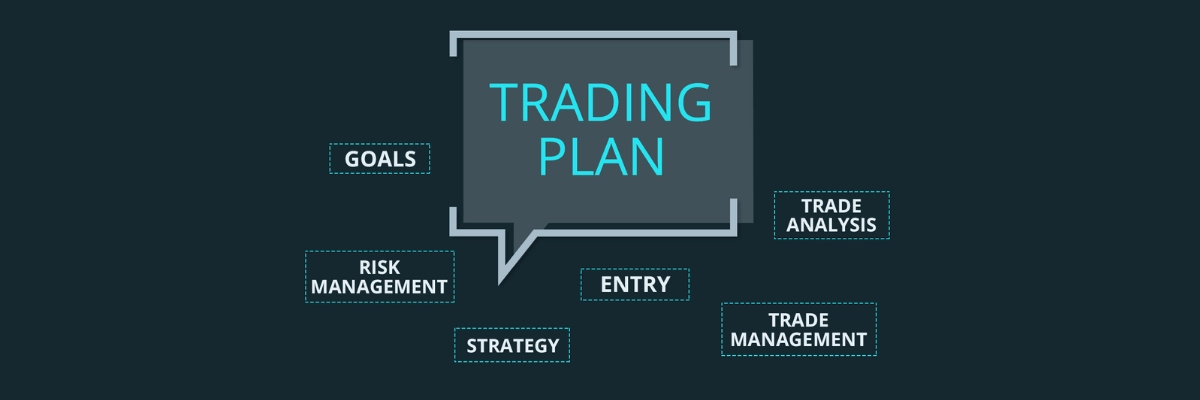
Before entering the markets, the very first question every trader should ask is whether they have a proper plan in place. A trading plan acts as a strategic roadmap, guiding how trades should be executed. No trade should ever be placed without a well-researched and structured plan backing it.
A solid trading plan is documented clearly and followed with discipline. It should only be adjusted when a defined part of the plan consistently fails to work. At its core, a trading plan outlines entry and exit criteria, risk-management guidelines, and position-sizing rules. It also helps traders decide when to trade, how to trade, and under what conditions to participate in the market.
Many new traders enter the trading world assuming that simply knowing a strategy is enough. They follow the rules for a short period, but without understanding the foundation of the strategy, they often drift into random decision-making. This leads them to trade emotionally, unaware of how market volatility can impact their performance—especially when they trade without structure, discipline, or awareness of potential consequences on platforms like OneFinancials.
A trading plan is a structured framework built on detailed research that outlines a trader’s goals, time commitments, and risk tolerance. It serves as a complete guide that covers every stage of the trading process.
Even though trading plans are comprehensive, they don’t need to be complicated. With a well-designed and carefully researched plan, traders can track their progress, review outcomes, and assess how well their strategy is performing.
However, beginners who trade without a defined plan or strategy often enter the market without adequate knowledge of potential risks and rewards.
Risk is determined by how much exposure you are willing to take in the market, supported by a well-researched strategic plan. The level of risk may differ from trader to trader, but it typically falls within 1% to 5% of the total portfolio for any single trading day.
Because of this defined risk limit, traders must prepare their strategies in advance. This way, if the market starts moving unfavorably and the loss approaches the predetermined threshold,
they can exit the trade and remain out of the market until conditions become stable again.
Before stepping into the market, the first thing traders must evaluate is whether they actually have a structured approach. A trading plan acts as a clear roadmap, outlining how trades should be executed—and no position should be taken without a well-researched strategy behind it.
A trading plan should be documented and followed with discipline. It must only be changed when something within the structure consistently fails. A solid plan includes defined entry and exit rules, risk-management guidelines, and position-sizing methods. Traders can also outline when to trade, how frequently, and under what conditions.
Traders should analyze after every trade. Adding up the profit and loss is secondary to knowing the why and how. It helps the traders to take necessary decisions concerning the future trades. There is no way to guarantee a trade will make money but analyzing the trades can help the trader to help either buy, sell or hold a particular trade.
Successful practice trading does give the trader confidence in the system. Having a strategic and well-researched plan is crucial, if the trader wants to be consistently successful in the trading game. Get research-based trade recommendations and be a responsible trader. Happy Investing!
Disclaimer : All content provided is for informational purposes only, and shall not be relied upon as financial/investment advice...